Description
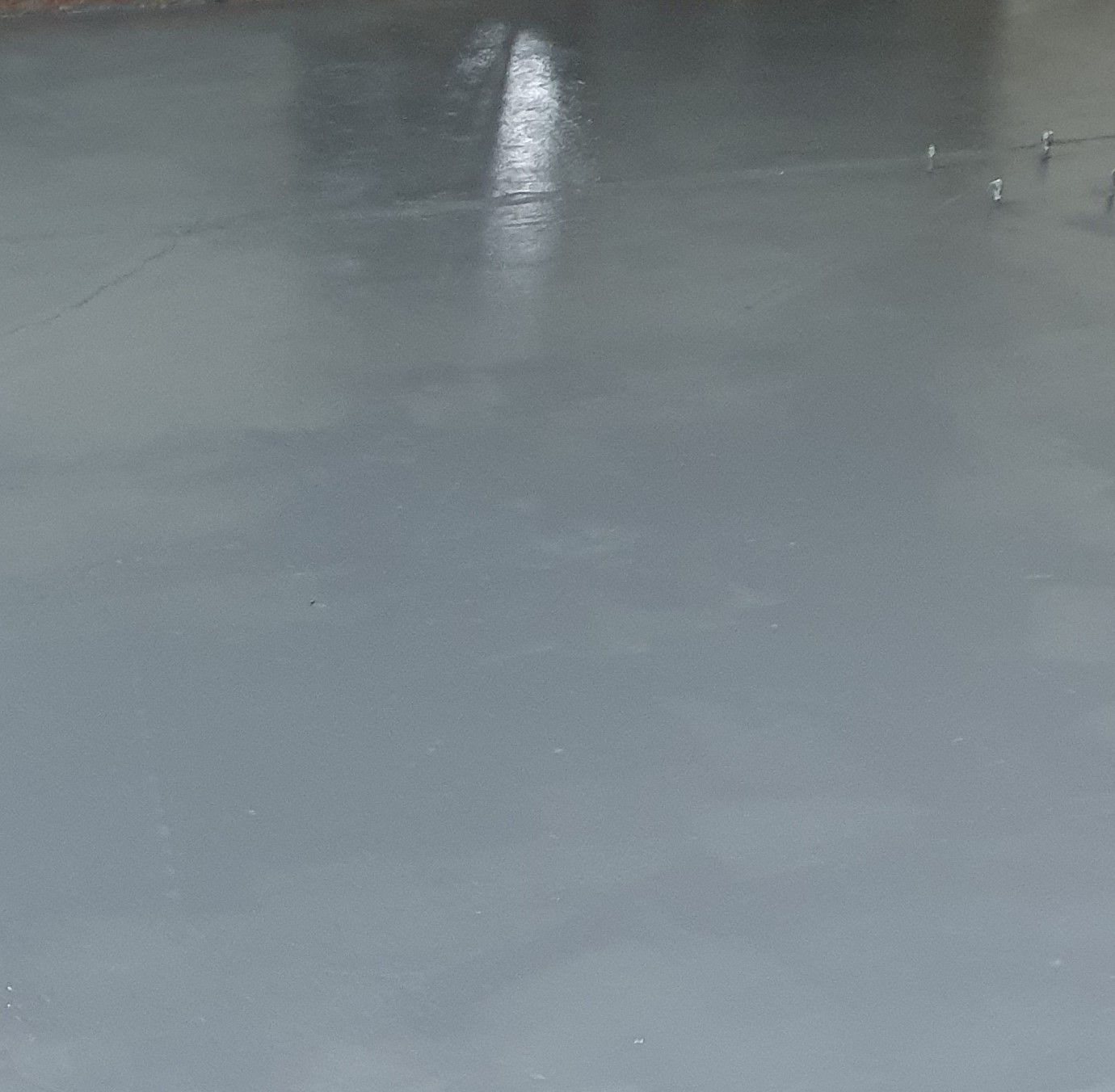
ECP 526X is a high quality coloured conductive 2K epoxy system. Environmentally friendly, it offers the advantages of low odour, and easy cleaning of equipment with water and anti-slip properties. Additionally, the coating has an advantage over conventional anti-slip coatings as it can be applied by virtually any method, including spraying. It is very aesthetically appealing as it is made without the traditional additives used in anti-slip coatings such as grit and metal shards and provides a silky matte finish.
ECP 526X finds application in areas such as:
Floor coatings (particularly where the previous coating is unknown as solvent will attack many coatings causing them to lift).
Floor Coatings in ATEX areas
Typical installations include:
- Electrical industry.
- Petrol/ Chemical industries.
- Water treatment plants.
- Food Industry- Machinery and surfaces.
- And many other industrial uses.
ECP 526 exhibits excellent mechanical properties which will withstand abrasion and impact, as well as giving good resistance to a wide range of chemicals including: Oils, Fats, Solvents, Acids and Alkalis.
The electrical properties of the paint are permanent and independent of humidity; a conductive underlay is not required, for grounding the system.
Additionally, ECP 526 provides the option of directly grounding racking/shelving used for storing ESSD’S to the floor.
For personnel grounding applications, the product is best used in conjunction with suitable electrostatic dissipative footwear, e.g., ECP 1450 series foot straps.
Technical data:
Maximum VOC content 20.34g/ltr Kgs/ltr
Solids Approx. 58%
Flash Point 163 °C
Specific Gravity 1.370 g/cm3
Viscosity 2.5 poise ICI cone and plate
Storage 6 months in original sealed containers
Pot life 1 hour @ 20 C.
PH 8.5
Firm dry 16 hours
Hard dry 3 days
2 pack mixing ratio 4:1 (4 parts water base epoxy to 1 part hardener)
Cleaning Use warm soapy water before curing complete.
Thinning If require thin with approx. 10-20 % of water.
(Thin after mixing the two parts).
Colour Range Light Grey, Dark Grey, Yellow, Orange, Red, other colours available on request.
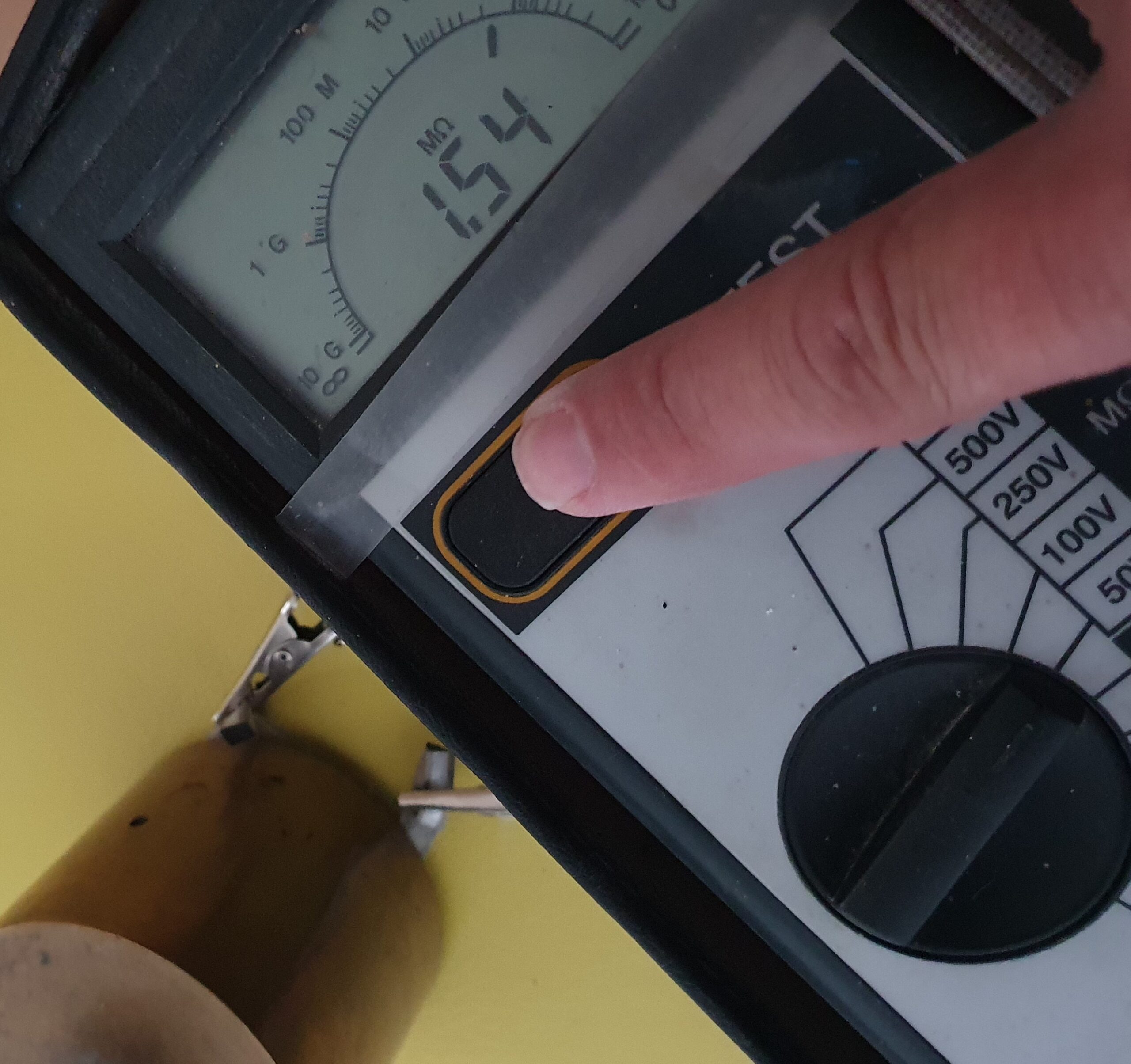
Surface Resistance <10 7 per square @ two coats
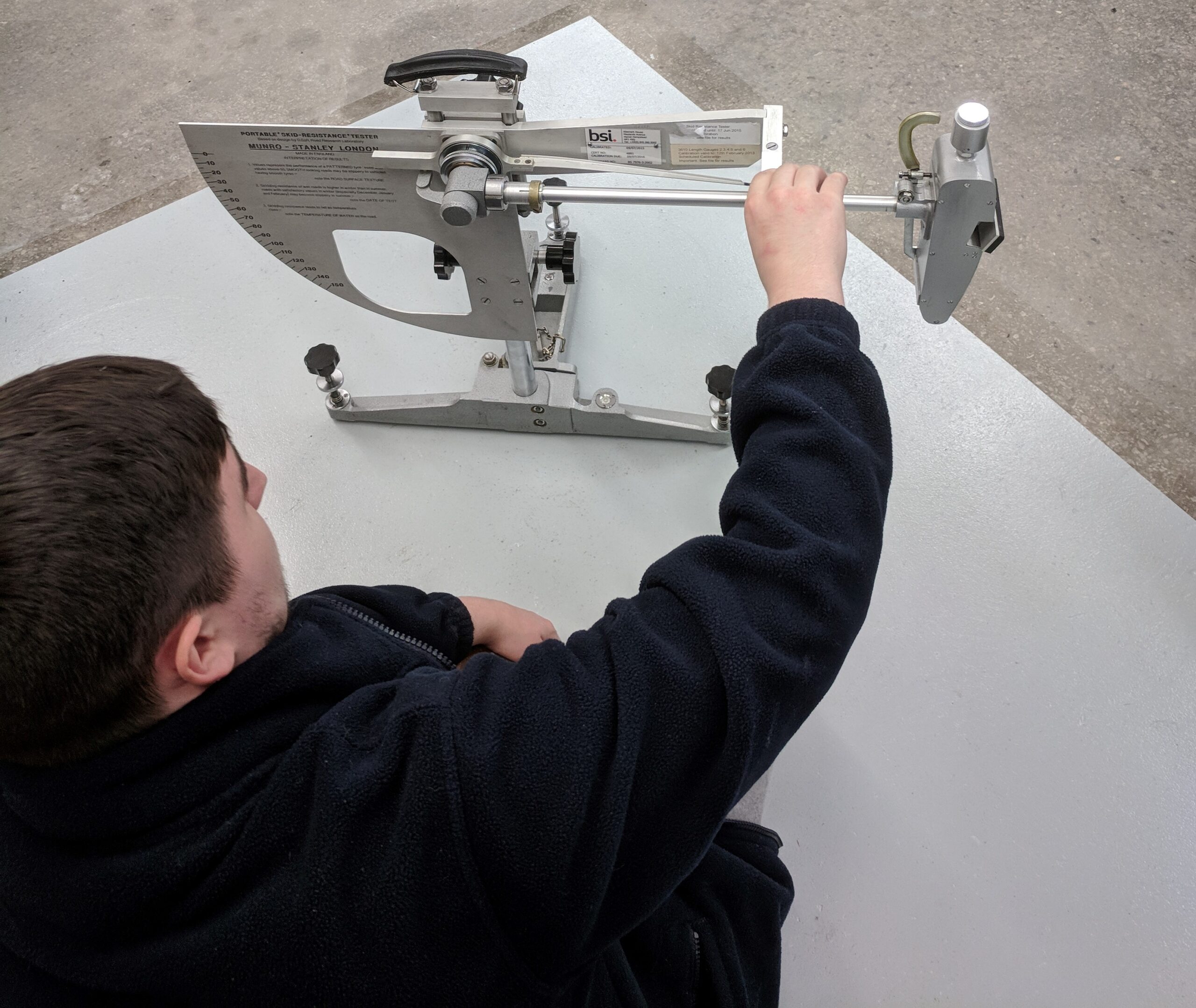
PTV or SRV Values: Sprayed: Dry – 65 Wet – 55
Rollered: Dry – 64 Wet – 35
Brushed: Dry – 60 Wet – 36
| PTV | |
| High Slip Potential | 0-24 |
| Moderate Slip Potential | 25-35 |
| Low Slip Potential | 36+ |
Grounding
Grounding is best executed by means of a non-oxidising metal plate, bolted to the floor. Contact resistance is significantly reduced if a conductive rubber pad is used in addition to the metal plate top. The grounding plate can then be led to earth via a bonding point and ground cord. ECP 1440/500 Grounding Kit is available as a
standard product for this application.
Application
The base paint must be thoroughly mixed to ensure complete dispersion of the conductive medium. Hardener should be thoroughly mixed into the base paint in the ratio 4 parts of base paint to 1 part hardener. Typically, a 4.0 litre pack of paint can be mixed with a 1.0 litre pack of the hardener.
The coating is best applied by means of a spray gun to harness the full potential of anti-slip properties. The coating can also be applied by brush or roller.
Maintenance
The painted floor should be kept clean to avoid soiling shielding the electrostatic conductive properties of the floor and also its anti-slip performance, therefore a regular cleaning regime should be implemented using non-abrasive and nonaggressive techniques.
Regular checks of the grounding arrangements should also be carried out.
PREPARATION:
NB: As with all paints it is suggested that a small trial be performed before the complete area is coated and when dry tested for adhesion, appearance and resistance.
It is recommended that a sealer is used on floors before coating ECP 526 and that these following preparations are undertaken
NEW CONCRETE: In the case of newly laid concrete, it is important that the concrete has been allowed to dry out for a minimum of 28 days before considering applying a concrete sealer, moisture content should be below 6%.
The main problem with new floors is the weak surface layer (laitence). This water rich top layer forms during the drying out period and is mechanically weak.
The laitence has a chemical composition different to the rest of the concrete. The surface should therefore be acid etched to remove the laitence.
OLD CONCRETE: Remove all oils, grease, dirt etc. together with the removal of old or failed coating to ensure a sound base. In order to ensure good adhesion and long-term performance of the coating, it is essential that the correct type of surface preparation is carried out.
The following are recognised methods: –
ABRASIVE BLAST CLEANING:
Should always be the first choice for heavy duty systems, if conditions allow.
SCARIFYING:(or “scrabbling”)
Rotating wheels and brushes scour the concrete surface.
ACID ETCHING:
This method is most suited for use on new concrete floors and is used to remove laitence, it will not remove old paint, oil or grease. It should only be used where sufficient drainage exists to allow the water and acid solutions to be removed safely.