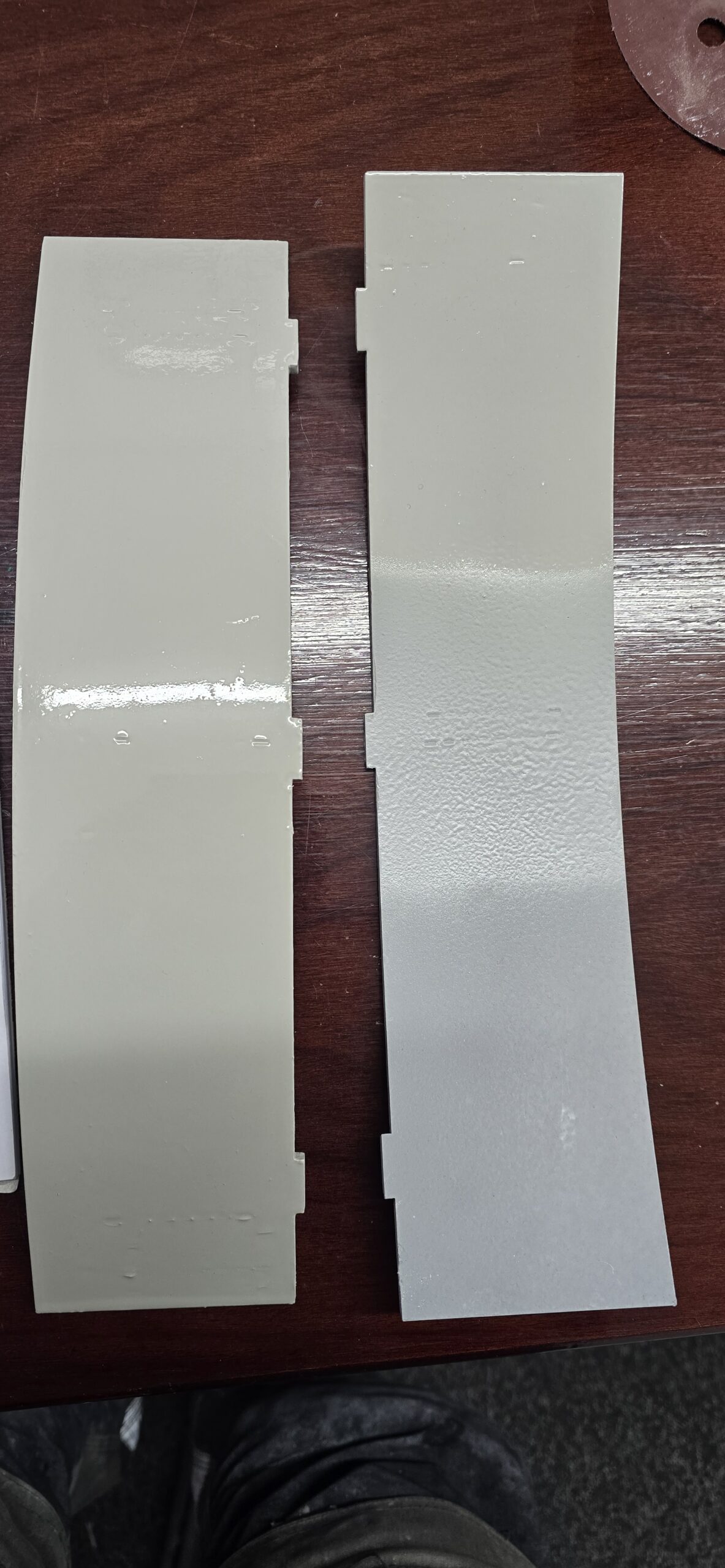
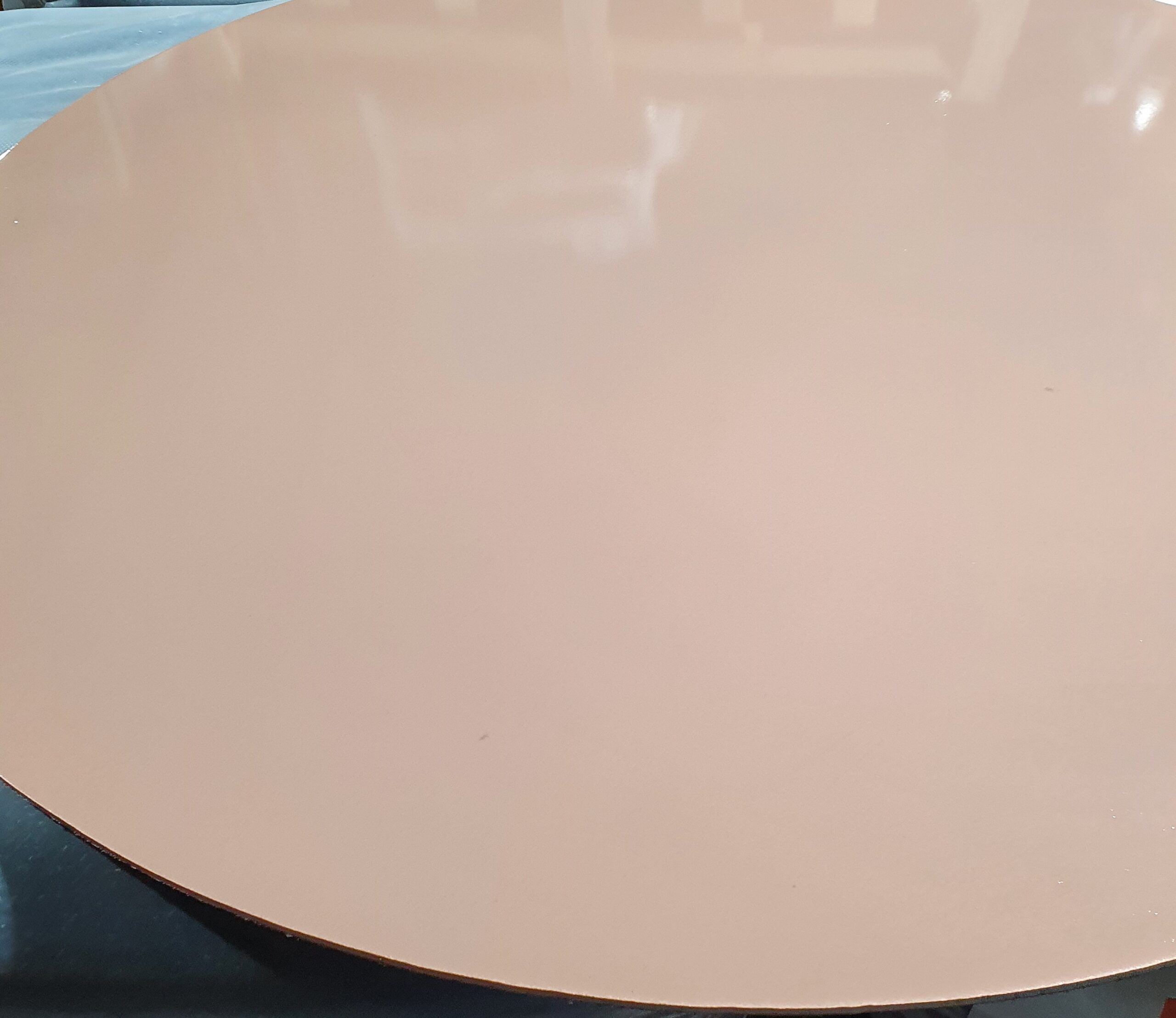
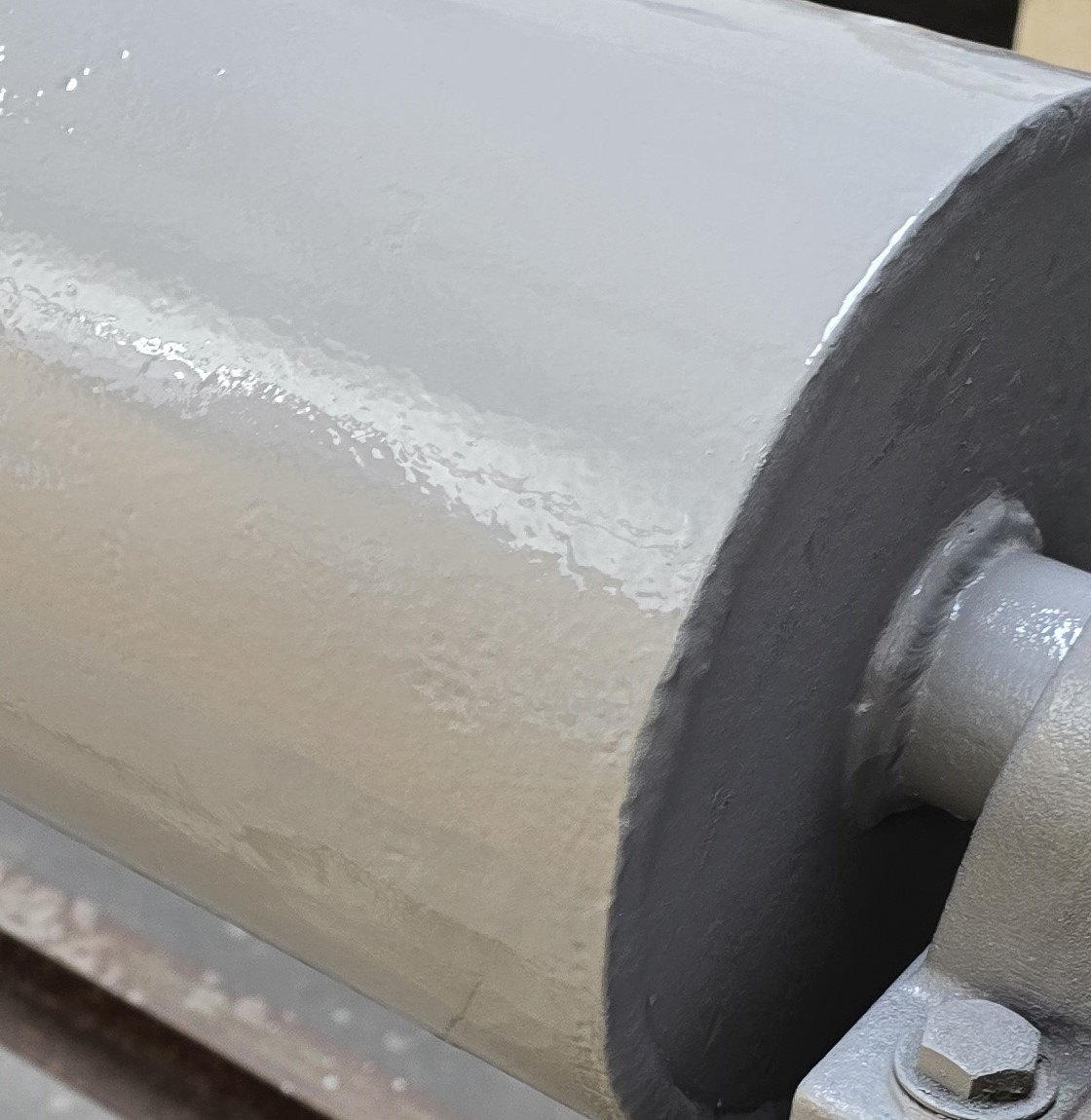
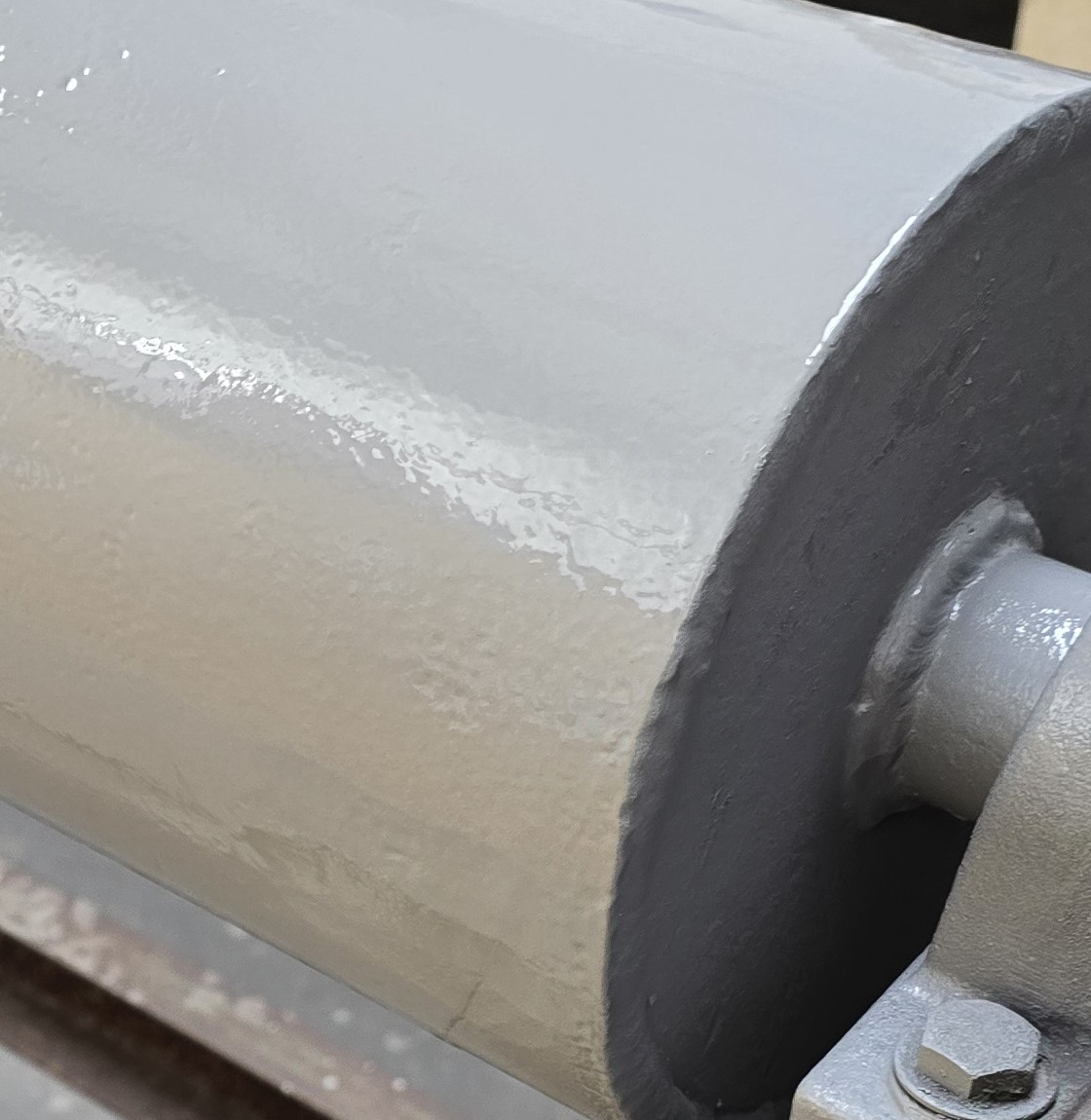
Description
Can be applied to ferrous and non-ferrous metals, wood, concrete, polymers, asbestos, fibreglass etc.
Typical installations include:
- Electrical industry.
- Petrol/ Chemical industries.
- Water treatment plants.
- Food Industry- Machinery and surfaces.
- And many other industrial uses.
ECP 527S/CR is a slow curing system, being touch dry in 4-6 hours, firm dry in 24 hours and fully cured in 5-6 days @ 20 °C°.
Technical data
Solids Approx. 65%, base – 75% hardener
Flash Point 25 °C
Specific Gravity 1.4 g/cm3
Viscosity 25-35 seconds B4 cup @ 25 °C
Temperature resistance 150 °C continuous – 200 °C for short periods
Storage 12 months in original sealed containers
Pot life 4-6 hours @ 20 °C.
Firm dry 24 hours
Hard dry 5-6 days
2 pack mixing ratio 2.5:1 (base to hardener)
Colour Range Light Grey. (Other colours available subject to
agreement on shade and minimum quantities)
Smooth finish.
Surface Resistance <10 11-12 W per square @ two coats
Chemical Resistance
The result list in the column “incipient surface change” refers to the first changes in the surface of the film becoming visible, e.g. Isolated microscopically fine blisters, slight softening of film surface, etc. after full immersion in the named chemical.
| Incipient Surface Change |
Nature Of Change |
No More Protection |
|
| Tap water | 13 months | Small blisters | >20 months |
| Distilled water | 13 months | Small blisters | >20 months |
| Sea water | 13 months | Small blisters | >20 months |
| Hydrochloric acid 5% | 15 months | Small blisters | >20 months |
| Hydrochloric acid 10% | 6 months | Small blisters | >20 months |
| Acetone | >3 months | Softening | >20 months |
| Methyl ethyl ketone | >15 months | Softening | >20 months |
| Methyl isobutyl ketone | >20 months | ||
| Cyclohexanone | >20 months | ||
| Diacetone alcohol | >20 months | ||
| Formaldehyde 40% | >16 months | Gloss reduction | >20 months |
| Dimethyl formamide | 3 months | Softening | >20 months |
| Methylene chloride | 3 days | Blisters | 3 days |
| Chloroform | 3 days | Blisters | 3 days |
| Carbon tetrachloride | >20 months | ||
| Dichloroethane | 0.5 months | 0.5 months | |
| Dichloropropane | >10 months | ||
| Trichloroethane | >10 months | ||
| Perchloroethane | >10 months | ||
| Chlorinated benzene | >18 months | ||
| Clophen A 30 | >20 months | ||
| Clophen A 60 | >20 months | ||
| Caprolactam 100% | >20 months | ||
| Caprolactam 50% | >20 months | ||
| Caprolactam 30% | >20 months | ||
| Caprolactam 20% | >20 months | ||
| Tartar 5% | >16 months | Small blisters | >20 months |
| Skydrol A 500 | >20 months | ||
| Trikresyl phosphate | >20 months | ||
| Wash liquor 3% | 12 months | Small blisters | >20 months |
| Dish washer detergent 3% | 12 months | Small blisters | >20 months |
| Vehicle cleaner (acid) 100% | 6 months | Small blisters | >20 months |
| Vehicle cleaner (acid) 10% | >9 months | Small blisters | >20 months |
| Jet fuel | >6 months | ||
| Electrophoresis lacquer | >5 months | ||
| Sulphuric acid 5% | 15 months | Small blisters | >20 months |
| Sulphuric acid 10% | 15 months | Small blisters | >20 months |
| Sulphuric acid 20% | 15 months | Small blisters | >20 months |
| Sulphuric acid 30% | 1 month | Small blisters | >2 months |
| Sulphuric acid 50% | 1 month | Small blisters | >2 months |
| Nitric acid 5% | 13 months | Small blisters | >2 months |
| Nitric acid 10% | 6 months | Small blisters | >13 months |
| Phosphoric acid 5% | 15 months | Small blisters | >20 months |
| Phosphoric acid 50% | >9 months | Small blisters | |
| Boric acid 10% | 15 months | Small blisters | >20 months |
| Caustic soda solution 5% | 9 months | Gloss reduction | >20 months |
| Caustic soda solution 10% | 9 months | Gloss reduction | >20 months |
| Caustic soda solution 20% | 9 months | Gloss reduction | >20 months |
| Caustic soda solution 30% | 9 months | Gloss reduction | >20 months |
| Caustic soda solution 40% | 9 months | Gloss reduction | >20 months |
| Caustic potash solution 5% | 9 months | Gloss reduction | >20 months |
| Caustic potash solution 10% | 9 months | Gloss reduction | >20 months |
| Caustic potash solution 20% | 9 months | Gloss reduction | >20 months |
| Ammonia 5% | 0.5 months | Blisters | 2 months |
| Ammonia 10% | 0.5 months | Blisters | 1 month |
| Ammonia 20% | 3 days | Blisters | 0.5 months |
| Hydrazine hydrate | 7 days | Blisters & softening | 7 days |
| Soda solution 5% | >20 months | ||
| Soda solution 10% | >20 months | ||
| Sodium bicarbonate 10% | >20 months | ||
| Common salt solution 5% | >20 months | ||
| Common salt solution 10% | >20 months | ||
| Ammonium chloride 30% | >20 months | ||
| Chloride of lime solution 1% | >8 months | ||
| Formic acid 5% | 1 month | Blisters | 2 months |
| Formic acid 10% | 1 month | Blisters | 2 months |
| Acetic acid 5% | 5 months | Blisters | 6 months |
| Acetic acid 10% | 2 months | Blisters | 2 months |
| Oxalic acid 10% | >20 months | Blisters | |
| Citric acid 10% | >20 months | ||
| Lactic acid 5% | >20 months | ||
| Lactic acid concentrate | 18 months | Small blisters | >20 months |
| Tartaric acid 5% | >20 months | ||
| Oleic acid | >20 months | ||
| Linseed fatty acid | >20 months | ||
| Succinic acid 10% | 13 months | Small blisters | >20 months |
| Coconut fatty acid | >20 months | ||
| Maleic acid 10% | >20 months | ||
| Petroleum spirit | >20 months | ||
| White spirit | >20 months | ||
| Benzene | >20 months | ||
| Toluene | >20 months | ||
| Xylene | >20 months | ||
| Methanol | 5 months | Softening | >20 months |
| Ethanol 100% | 15 months | Softening | >20 months |
| Ethanol 70% | 18 months | Softening | >20 months |
| Ethanol 40% | >20 months | ||
| Ethanol 15% | >20 months | ||
| i-propanol | >20 months | ||
| n-butanol | >20 months | ||
| Cyclohexanone | >20 months | ||
| Benzyl alcohol | 0.5 months | Softening | >20 months |
| Ethylene glycol | >20 months | ||
| Glycerine | >20 months | ||
| Ethyl acetate | >20 months | ||
| Butyl acetate | >20 months | ||
| Metyglycol acetate | >20 months | ||
| Ethylglycol acetate | >6 months | ||
| Methyl acrylate | >6 months |
Application:
The base paint must be thoroughly mixed to ensure complete dispersion of the conductive medium. Hardener should be thoroughly mixed into the base paint in the ratio 2.5 parts of base paint to 1 part hardener. The coating can be applied by either brush, roller or spray.
For spray work, thinner should be added to give a viscosity of 25-35 seconds on No.4 BS Flow Cup.
Moisture in ECP 527/S should be avoided so all equipment must be carefully dried, ensuring brushes, spray guns, and airlines are clean and free from traces of oil and water.
Preparation:
N.B. As with all paints it is suggested that a small trial be performed before the complete area is coated and when dry tested for adhesion, appearance and resistance.
Ferrous metals: Blasting, followed thorough cleaning and degreasing, for light ferrous metals clean, degrease and abrade. If metal work has been painted previously, abrade to expose as much metal work as possible to ensure good grounding.
Non- ferrous metals, clean, degrease and abrade, use etch primer.
NEW CONCRETE:
In the case of newly laid concrete, it is important that the concrete has been allowed to dry out for a minimum of 28 days before considering applying a concrete sealer, moisture content should be below 6%.
The main problem with new floors is the weak surface layer (laitence).
This water rich top layer forms during the drying out period and is mechanically weak.
The laitence has a chemical composition different to the rest of the concrete. The surface should therefore be acid etched to remove the laitence.
Prime with ECP 500 sealer
OLD CONCRETE:
Remove all oils, grease, dirt etc. together with the removal of old or failed coating to ensure a sound base. In order to ensure good adhesion and long-term performance of the coating, it is essential that the correct type of surface preparation is carried out.
The following are recognised methods: –
ABRASIVE BLAST CLEANING:
Should always be the first choice for heavy duty systems if conditions allow.
SCARIFYING:(or “scrabbling”)
Rotating wheels and brushes scour the concrete surface.
ACID ETCHING:
This method is most suited for use on new concrete floors and is used to remove laitence, it will not remove old paint, oil or grease. It should only be used where sufficient drainage exists to allow the water and acid solutions to be removed safely.