Description
ECP 9604 is a proprietary TBA ECP injection moulding compound utilising multi wall carbon nanotube technology to give a permanently conductive material. Special compounding techniques at low filler loadings ensure the retention of physical properties and excellent cleanliness.
Synergistic hybrids of low levels of steel fibres ensure very high EMI shielding performance, whilst retaining good physical performance.
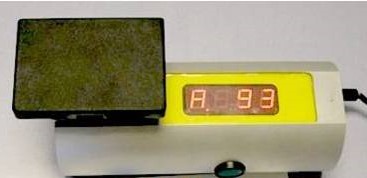
Product Image illustrates Reflectometer test showing 93% reflectance equivalent to 62dB S.E.
APPLICATIONS
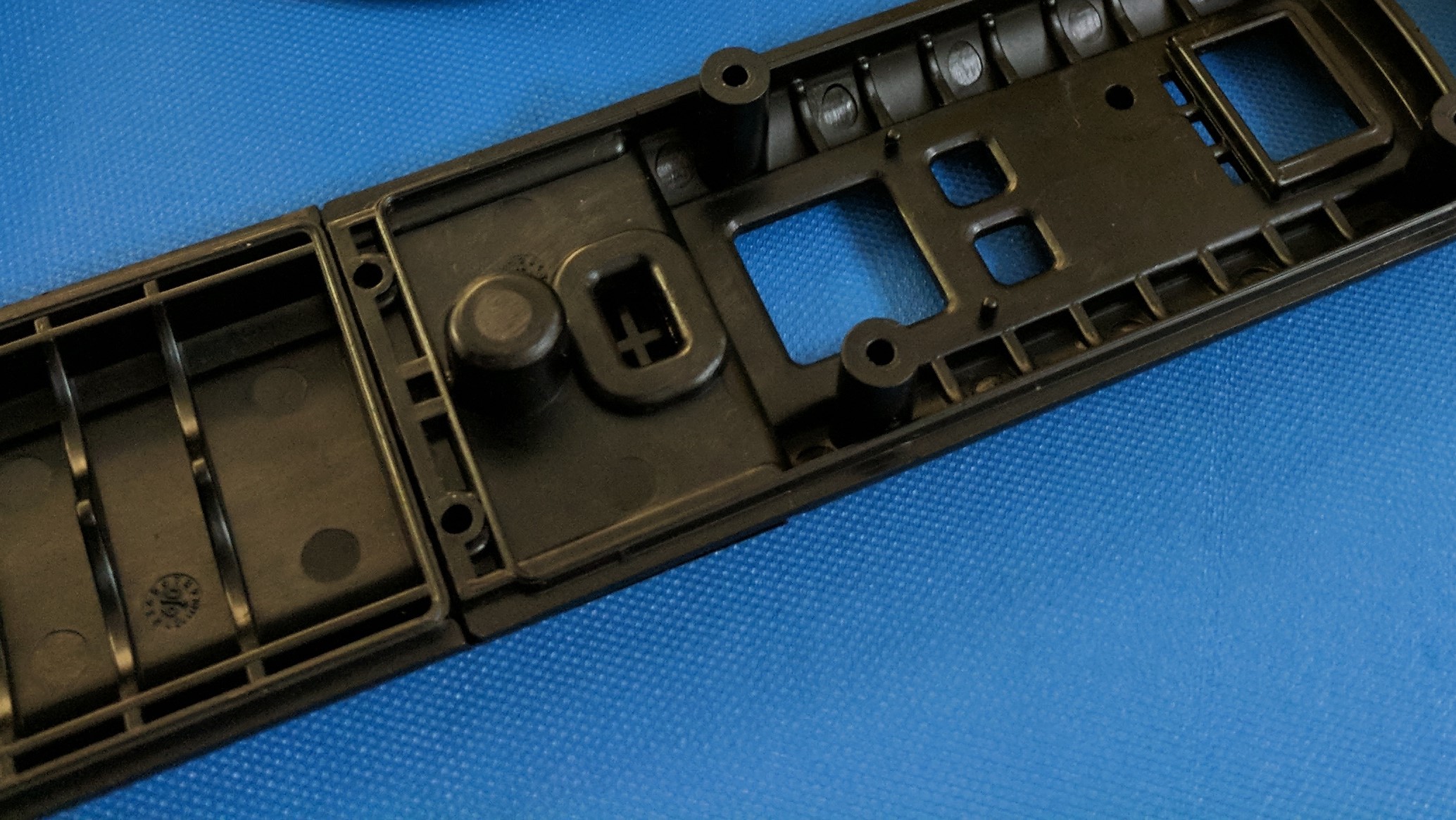
Mouldings made from ECP 9604 exhibit excellent dimensional and chemical stability, and mouldings are clean and non-sloughing.
Typical applications include:
- Production aids for the electronics industry (e.g.,storage boxes, enclosures, particularly when EMI shielding is required
- EMI shielding equipment housing.
- Applications requiring a high level .of EMI shielding
PROPERTIES
| Parameter | Condition | Typical Value | Unit | Test method |
Surface resistance |
23+/-2C | 1.0E+04 | ohm/sq | BS 2044:1984 /3 |
| Volume resistance | 23+/-2C | 2 | ohm.cm | BS 2044:1984 /3 |
| EMI Shielding | 100MHz/1GHz | 62/70 | dB | Reflectometer |
| Specific Gravity | 1.29 | g/cm3 | BS EN ISO 1183-1:2004 | |
| Melt flow rate | 250C/5kg | 3.3 | g/10 min | ISO 1133:1991 |
| Tensile strength at break | 50mm/min | 60.3 | MPa | ISO 527-2:1997 |
| Tensile modulus | 1mm/min | 2450 | MPa | ISO 527-2:1997 |
| Elongation at break | 50mm/min | 4.3 | % | |
| Flexural modulus | 2mm/min | 2840 | MPa | ISO 178:2003 |
| Izod Impact | 23+/-2C | 10.1 | KJ/m2 | ISO179-1:2001 |
| Heat deflection temp | 1.8MPa | 101 | C | BS EN ISO 75-1&2 |
RECOMMENDED PROCESSING CONDITIONS
MACHINE
It is recommended that an in-line reciprocating screw machine be used to injection mould ECP 9604.
CYLINDER TEMPERATURE
230-270°C. The optimum cylinder temperature will depend upon the size and complexity of the moulding.
MOULD TEMPERATURE
40-60°C. The optimum mould temperature will depend upon the size and complexity of the moulding.
MOULD DESIGN
Moulds should be designed to obtain rapid filling, and multiple gates for large area mouldings are recommended with the gate positioned to avoid possible formation of weld lines.
MACHINE AND MOULD WEAR
The intensive compounding action, which takes place during the manufacture of ECP 9604, ensures encapsulation of the reinforcement in polymer. This tends to minimise wear on injection screws and moulds. There is no evidence to show that ECP 9604 causes corrosion of mould steels.
MOISTURE
ECP 9604 absorbs moisture, therefore, prior to moulding please ensure thorough drying (i.e., 90°C for 4 hours). Materials should be re-dried if all the material is not used within 2-3 hours of opening the bag. Excess moisture may show as splash marks on the surface of these finished mouldings. If necessary, the material should be re-dried at 80 – 90°C in shallow trays for 2-3 hours. Other forms of drying of equivalent effect are also suitable.
USE OF REGRIND
Runners sprues and scrap mouldings can be reground and blended with virgin materials. Regrind additions should not exceed 10% by weight of the virgin material otherwise some reduction in properties may be experienced.
HEALTH & SAFETY
CAUTION – THIS MATERIAL IS ELECTRICALLY CONDUCTIVE
As this material does not have the insulting properties normally associated with polymers, due safety precautions must be taken in use and it is recommended that all products made from this material are suitably labelled.
These materials are stable at ambient and normal processing temperatures and can be processed safely in moulding and extrusion equipment at up to 300°C.
information in this publication and otherwise supplied to users is based upon our general experiences and is given in good faith, but because of the particulars which are outside our knowledge and control and affect the use of the product, no warranty is given or is implied with respect to such information. freedom from patent rights must not be assumed.